Government Camp, the village on US 26 below Timberline Lodge, takes its name from a hard winter and a stranded Army wagon train. In the fall of 1849, soldiers of the U.S. Regiment of Mounted Riflemen, just arrived in Oregon after marching from Fort Leavenworth, tried to bring wagons over the Barlow Road late in the season. Weather, worn-out animals and exhausted men forced them to leave about 45 wagons on Camp Creek. Travelers began calling the place Government Camp on Camp Creek, a name later shortened.
For decades afterward it was a stop on the toll road. Then a winter road, Portland’s ski jumpers and Timberline Lodge turned it into the mountain’s ski town.
The Mounted Riflemen of 1849
The regiment broke camp near Fort Leavenworth on May 10, 1849, trailed by a long train of six-mule supply wagons. One of its soldiers, William H. Packwood, recalled in a memoir printed in the Oregon Historical Quarterly that the officer gathering those supply trains was the quartermaster, Lt. D. M. Frost. The regiment reached Oregon that fall.
ODOT’s Mt. Hood Scenic Byway plan says the wagons left on Camp Creek belonged to a train led by a Lt. Frost, and that an early winter storm caught the small command off guard. The men got out alive, but they lost wagons, supplies and livestock. Government Camp’s Mt. Hood Cultural Center and Museum tells the same story: heavy snow forced the Army to abandon its wagons and supplies, and afterward travelers spoke of the place as Government Camp.
A stop on the Barlow Road
The Barlow Road ran right through what became the village, past the site of today’s Summit Ranger Station, and dropped west toward Laurel Hill. Just east lay Summit Meadows, in the early years the one dependable place to graze livestock after crossing Barlow Pass. Perry Vickers settled at the meadow in 1866, ran the tollgate there for a few years and built the Summit House. The National Register nomination for the Barlow Road counts him among the earliest guides for climbers on Mt. Hood. Along the old road toward Still Creek, a small resort called Swim grew up around a warm mineral spring and was busy in the 1920s.
The first homesteaders in the village itself were William G. Steel and O.C. Yocum, the museum says. They built a cabin and met the residency rules, and Yocum laid out the plat for what is now the village center. A hotel and cabins followed, serving road travelers, climbers and summer visitors. Someone tried to rename the place Pompeii, but the new name never caught on.
Snow becomes the attraction
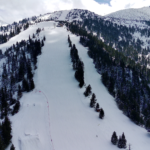
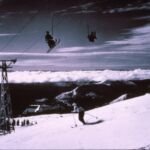
Government Camp stayed mostly a summer resort until a winter road opened in 1926, two years after the Mt. Hood Loop Highway was finished. Portland’s large Scandinavian community brought ski jumping with it, and crowds came up to watch the Cascade Ski Club’s meets on the Multorpor jump hill. Before long, watching turned into doing, and small ski areas opened at Summit, Multorpor and Skibowl. Timberline, which now runs Summit as Summit Pass, dates that area to 1927 and calls it the Pacific Northwest’s oldest ski area.
In the 1930s, Civilian Conservation Corps crews cleared fire-killed snags off the slopes and put up a ski shelter on Multorpor Mountain. Then the Works Progress Administration built Timberline Lodge a few miles uphill, and President Franklin D. Roosevelt dedicated it in 1937. The lodge settled the village’s future as a winter sports base, in the museum’s view, and a road and ski trails have tied the two together ever since.
As the museum points out, the same snow that stranded the Army in 1849 is now the reason the village exists at all.
See it today
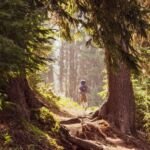
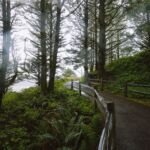
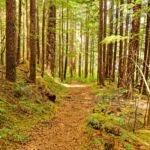
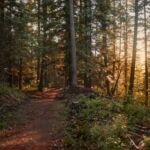
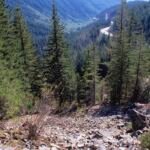
- The old road: The Barlow Trail follows a rocky, rutted piece of the Barlow Road from the village to Still Creek Campground. Bits of foundations and fireplace bricks from the Swim resort lie in the woods off the trail near the Still Creek end.
- Laurel Hill: West of the village, the Laurel Hill Chute Trail shows where emigrants lowered their wagons on the next leg of the road.
- Ski history: Summit Pass carries on the 1927 Summit ski area, while Mt. Hood Skibowl and the Multorpor Sno-Park keep the names of the other two early ski areas.
- Up to Timberline: The Glade Trail and Alpine Trail climb from the village area to Timberline Lodge. In winter many skiers ride them down to town.
- Around town: The Crosstown Trail skirts the village’s north edge and links to the others.
For old photos and local records, visit the village’s Mt. Hood Cultural Center and Museum.