Below Barlow Pass, beside an old stretch of the Mt. Hood Loop Highway, a mound of stones marks the grave of a woman whose name nobody knows. She died on the Barlow Road while bound for the Willamette Valley, with only about 50 miles left to go, and was buried beside the wagon track. Her grave was forgotten until 1924, when crews building the new loop highway came across it, overgrown, at the edge of the road.
Almost everything else about her is uncertain: her name, her age, her family and the year she died. What can be said is where she lies, how she was found and how people have remembered her since.
What the road crews found
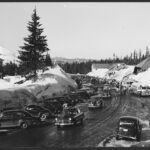
The National Register nomination for the Barlow Road says a highway crew dug up human remains in a wagon box during the summer of 1924. According to that account, the workers reburied the bones and raised a cairn of rocks over the new grave. ODOT’s Mt. Hood Scenic Byway plan also describes the woman as buried in a wooden box. A wooden cross went up on top of the cairn, and the marker was dedicated on June 30, 1924. That was the same day a caravan of officials drove the newly opened loop highway all the way around the mountain for the first time.
The spot lies beside the Salmon River’s East Fork, at the western foot of Barlow Pass, where the Barlow Road forded the stream. Wagons and, later, stagecoaches used that crossing for decades, and no traveler’s account of the burial has turned up.
What is known, and what isn’t
No record names her or says when she died. She lies beside a road that wagons used from 1846 into the twentieth century, so she could have died in almost any of those years. The markers placed over her have never agreed. A large wooden Forest Service sign from the 1930s left the year unfinished, with a question mark after the 18. A 1982 bronze plaque gives the decade as the 1840s, again with a question mark. Some markers over the years have printed a firm year, but no document backs one up, and the National Park Service’s page on the site gives no year at all.
Travelers did die on the Barlow Road, the Park Service notes, some of them with the end of the trail almost in reach. She is one of them, remembered mainly because her grave was found again.
Not the only grave on the road
A few miles west, the small Summit Meadows Cemetery holds the grave of Perry Vickers, who settled at the meadow in 1866, kept a tollgate there and was killed in 1883. The same small plot holds an infant of the Barclay family who died in 1882 while the parents were camped at the meadow. A plaque nearby remembers Baby Morgan, buried there in October 1847. In September 1853, emigrant George Bond noted in his diary that Hanah died while his party rested at the meadow, and that they buried her the next day before moving on to Laurel Hill. These people have names because someone wrote them down. No such record has surfaced for the woman below Barlow Pass.
A grave kept by visitors
The site has had a run of markers. The 1924 cross came first. In 1936 the Daughters of the American Revolution, through its Multnomah Chapter, added a bronze plaque, which was later stolen. During the 1930s a large rustic sign went up across the road, the work of the Forest Service or a Civilian Conservation Corps crew. The same chapter placed another plaque on a boulder beside the cairn in 1982. All the while the stone pile has kept growing, because visitors add rocks as a memorial, and some leave flowers.
See it today
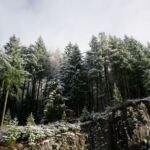
The grave is at a small pullout on Forest Road 3531, the old loop highway, a short way down from Barlow Pass off OR 35. Just past the culvert, a path leads about 65 feet into the woods to the creek crossing, where the wheels of wagons and stagecoaches cut deep troughs into the banks. One of the three crossings still holds its shape well. The ruts are fragile, so stay off their edges.
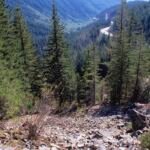
- The walk down: The Pioneer Woman’s Grave Trail follows the old wagon and stage route downhill from near the Barlow Pass Sno-Park, dropping from about 4,160 to 3,720 feet in roughly a mile, with an open view of Mt. Hood’s south face partway along.
- At the grave: The Pioneer Woman’s Grave Trailhead sits on the historic road, with several markers close by.
- More of the road: See the wagon chute on the Laurel Hill Chute Trail, or read the wider story on our Mt. Hood history page.
The cairn is a grave as well as a landmark. Our Leave No Trace guide has tips for visiting places like this one gently.