Where you stand matters more than which trail you pick. A lakeshore, a rushing creek, deep forest and the open slopes near timberline each hold different birds. The counts on our nature pages come from iNaturalist sightings near Mt. Hood, so they show which birds people report and when, not exact spots.
Ospreys, bald eagles, mergansers and herons hunt fish in open water, and mallards dabble in the shallows.
The American dipper bobs on wet rocks, then walks underwater after insects. It lives in the mountains all year.
Steller's jays, juncos, hairy woodpeckers and sooty grouse.
Clark's nutcrackers and Cassin's finches, mostly in summer and fall.
Song sparrows, spotted towhees and scrub-jays stay in thickets and at lower elevations.
Ospreys are here from April to September, while bald eagles and great blue herons are reported in every month. The Forest Service notes regular bald eagle sightings at Laurance Lake, and at Rock Creek Reservoir part of the day-use lot is shut most springs while eagles nest. Look for dippers on fast, rocky creeks rather than lakes.
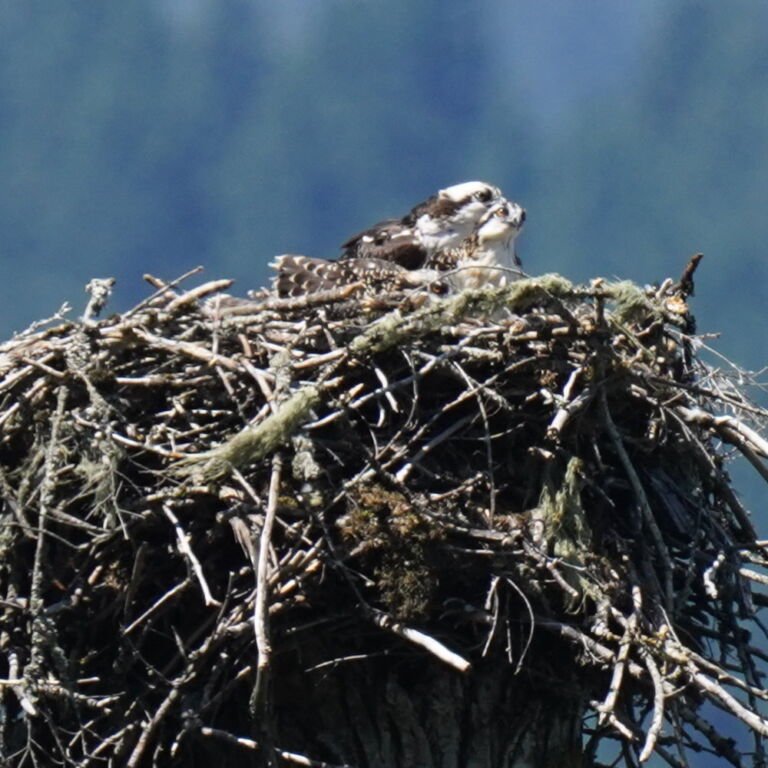 Osprey
Pandion haliaetus
Apr – Sep
A big fish-eating raptor with white underparts and a dark eye stripe that hovers over lakes and rivers, then plunges feet first…
 Bald Eagle
Haliaeetus leucocephalus
Year-round
North America's white-headed sea eagle, often perched near rivers, lakes and reservoirs where it hunts fish, scavenges and sometimes robs Ospreys.
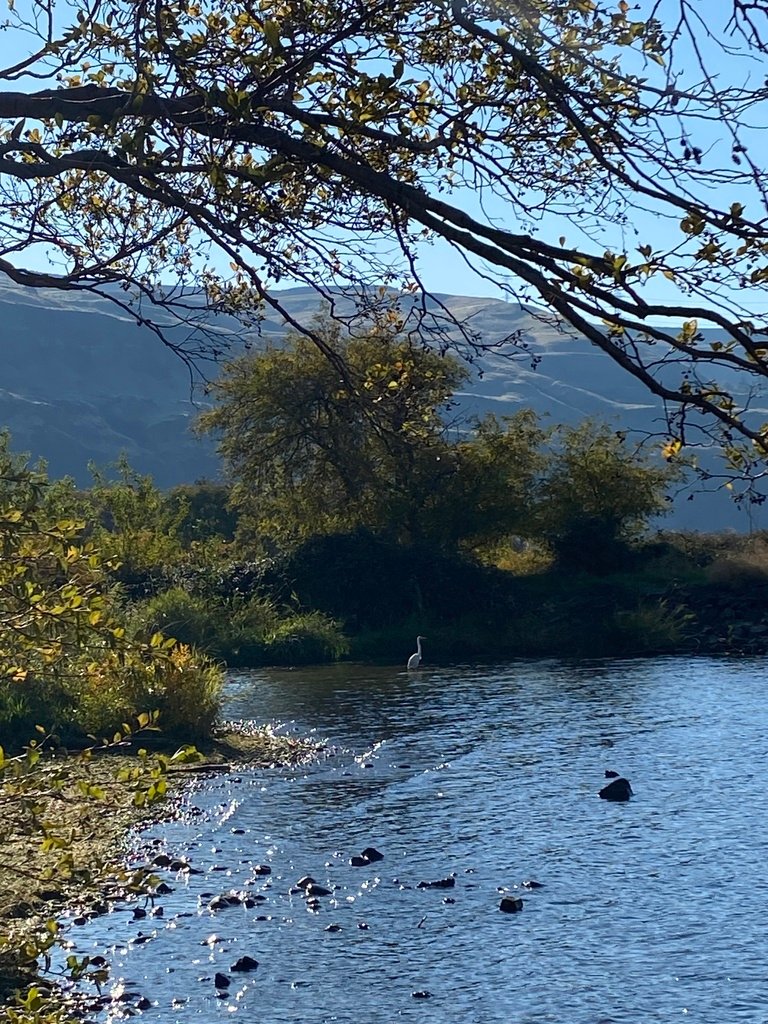 Great Blue Heron
Ardea herodias
Year-round
North America's largest heron, a tall gray wader that stalks fish and frogs in shallow water and flies with its neck pulled…
 Common Merganser
Mergus merganser
Feb – Nov
A long, slim diving duck of clear mountain rivers and lakes. Males are white with a green head; females are gray with…
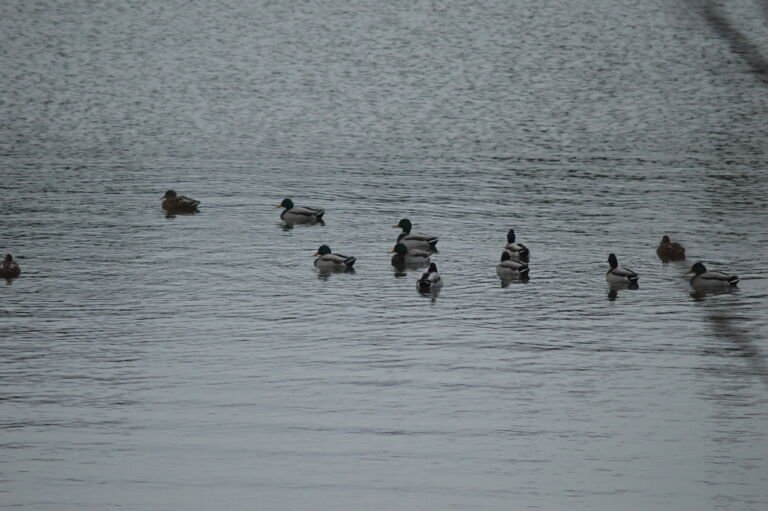 Mallard
Anas platyrhynchos
Mar – Oct
The familiar green-headed duck of lakes, ponds and slow rivers. Females are mottled brown with an orange bill blotched with black.
 Canada Goose
Branta canadensis
Mar – Nov
The big black-necked goose with a white chinstrap, found on lakes and reservoirs, where pairs raise families of fuzzy goslings in spring.
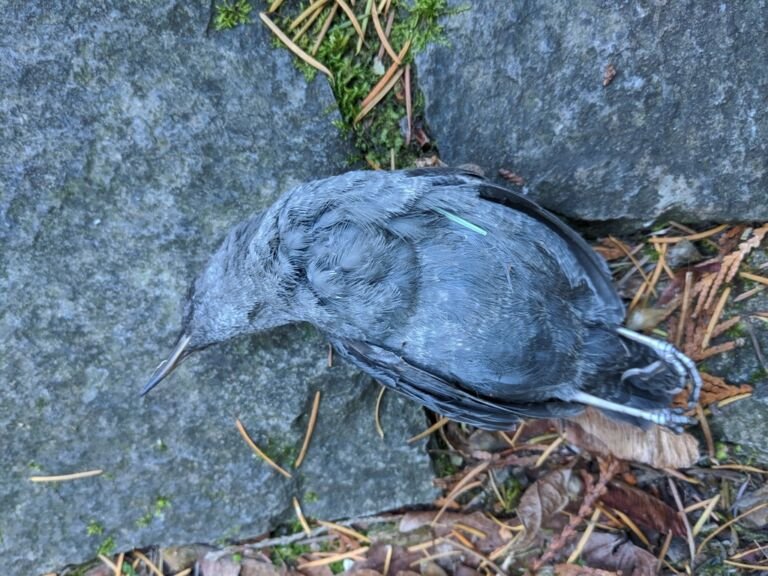 American Dipper
Cinclus mexicanus
Mar – Nov
A chunky gray songbird that bobs on rocks in fast mountain streams and walks underwater to hunt insect larvae. It sings even…
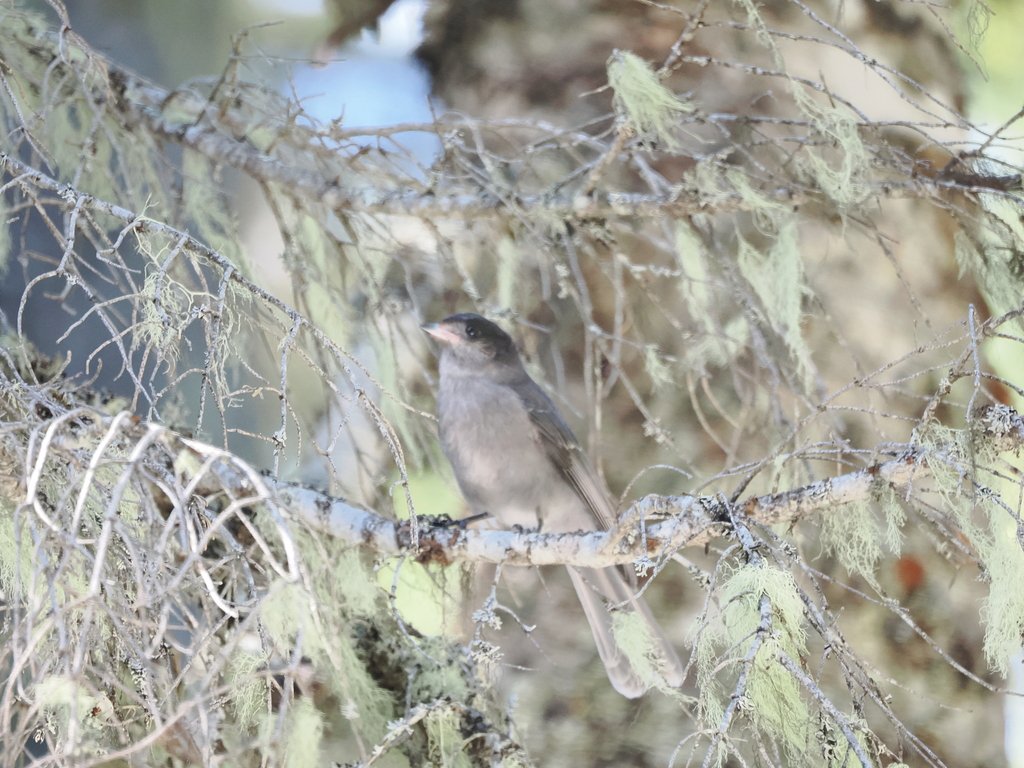
The Canada jay, once called the gray jay and nicknamed camp robber, is the most reported bird on our nature pages, and it often trails hikers and campers for food. Steller's jays play the same game at campgrounds and picnic areas, usually lower down. Clark's nutcrackers and Cassin's finches are summer and fall birds of the high forest near timberline. In spring, listen for male sooty grouse hooting from high in a conifer.
 Canada Jay
Perisoreus canadensis
May – Mar
A fluffy gray jay of mountain conifer forests, famous for boldly taking food at campsites and for storing food to survive the…
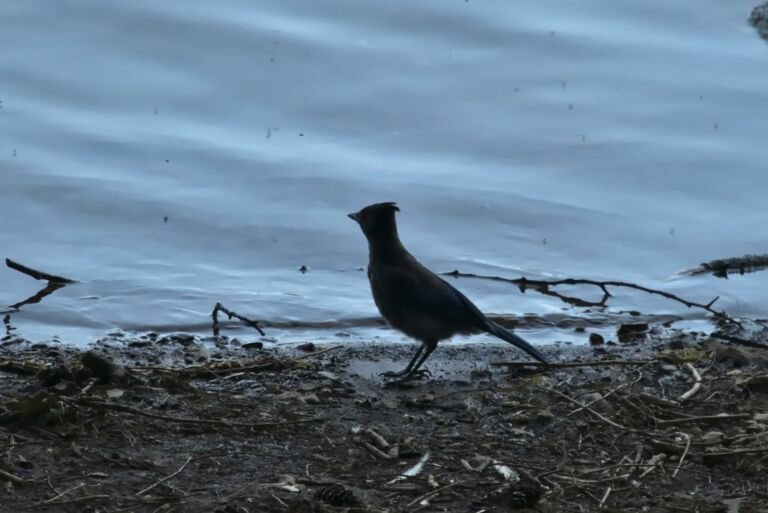 Steller’s Jay
Cyanocitta stelleri
Mar – Oct
A dark blue and black jay with a tall, shaggy crest and a harsh voice, common in Mt. Hood's conifer forests from…
 Dark-eyed Junco
Junco hyemalis
Apr – Oct
A small, hooded forest sparrow with white outer tail feathers that flash as it flies up from the ground. Common in Mt.…
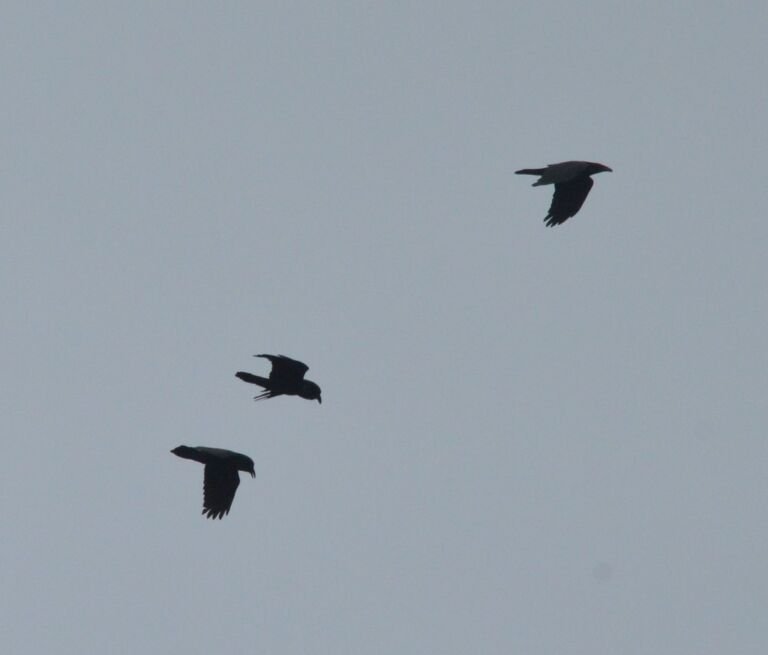 Common Raven
Corvus corax
Year-round
The big black bird croaking over Mt. Hood's ridges all year, known for its intelligence, aerial play and wedge-shaped tail.
 American Robin
Turdus migratorius
Feb – Oct
The familiar red-breasted thrush of lawns also nests in mountain forests, ranging in Oregon from sea level all the way to treeline.
 Yellow-rumped Warbler
Setophaga coronata
Apr – Oct
A small, busy warbler with a bright yellow rump patch. It nests in mountain conifer forest and, unlike most warblers, many stay…
 Clark’s Nutcracker
Nucifraga columbiana
Jun – Oct
A gray, black and white bird of timberline that buries thousands of pine seeds each fall and plants whitebark pine in the…
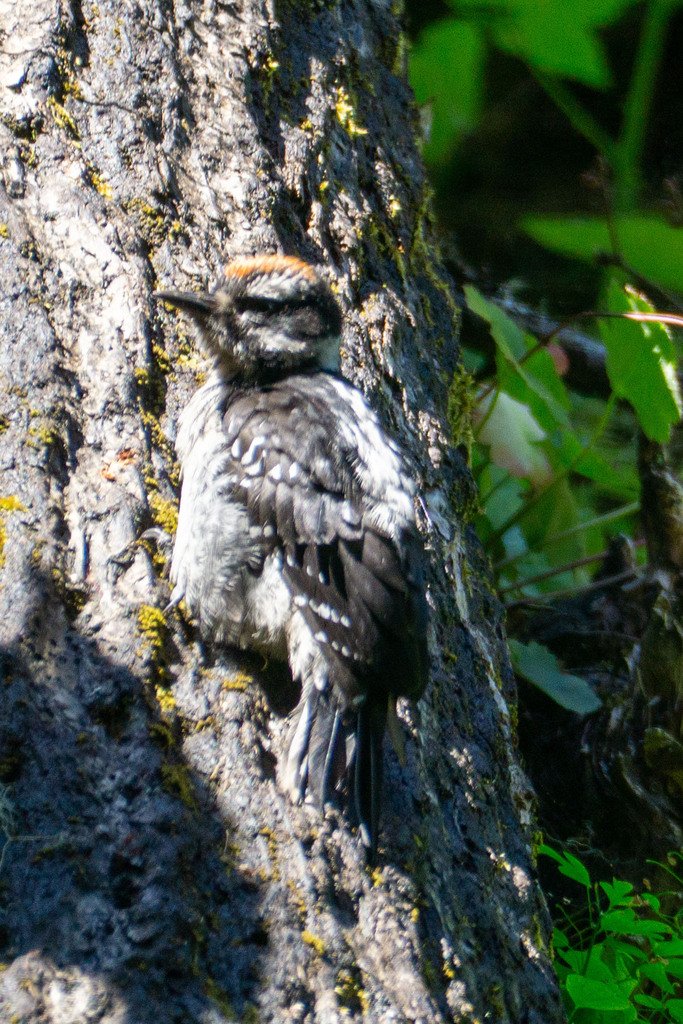 Hairy Woodpecker
Leuconotopicus villosus
Feb – Mar, May – Nov
A crisp black-and-white woodpecker of Oregon forests that digs into dead and burned trees for beetle larvae. Males wear a small red…
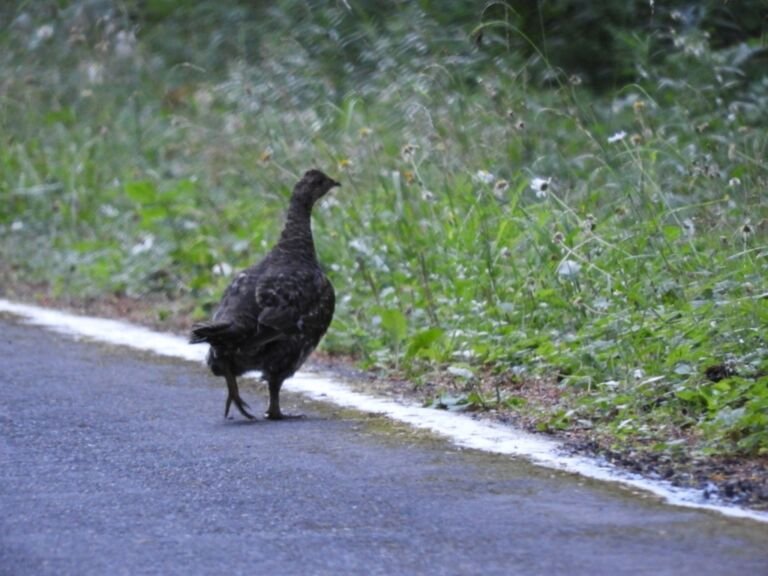 Sooty Grouse
Dendragapus fuliginosus
Apr – Nov
A large, dark forest grouse best known for the deep, hooting song males give from high in conifers each spring. Often surprisingly…
 Cassin’s Finch
Haemorhous cassinii
Jun – Oct
A high-country finch. Males wear a crisp red cap over a pinkish breast. Look for small flocks in mountain conifers, often up…
These birds like open ground, brush and lower elevations. Turkey vultures come back in spring and are most common over valleys and foothills, and red-tailed hawks hunt clearings and roadsides from a high perch. Golden-crowned sparrows nest far to the north and spend fall through spring here.
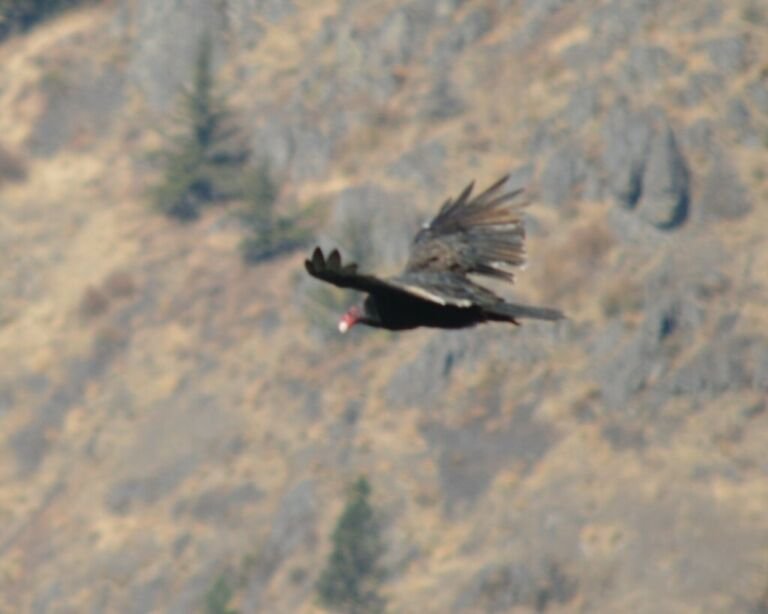 Turkey Vulture
Cathartes aura
Mar – Sep
A big, dark soaring bird with a small red head that rocks on wings held in a shallow V. It finds carrion…
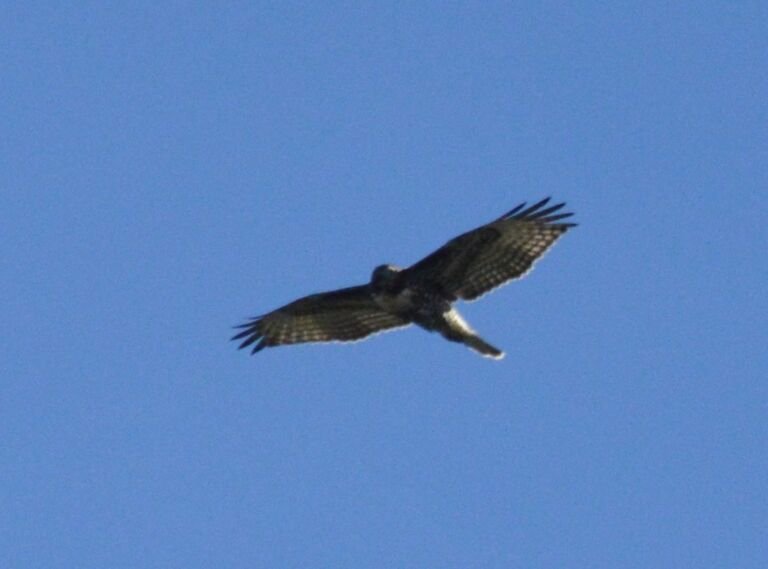 Red-tailed Hawk
Buteo jamaicensis
Feb – Dec
A big, broad-winged hawk often seen soaring over clearings or perched on poles and snags. Adults have a rusty orange-red tail.
 Brewer’s Blackbird
Euphagus cyanocephalus
Mar – Nov
A glossy black, pale-eyed blackbird that walks around open ground, lakeshores and parking lots, jerking its head with each step.
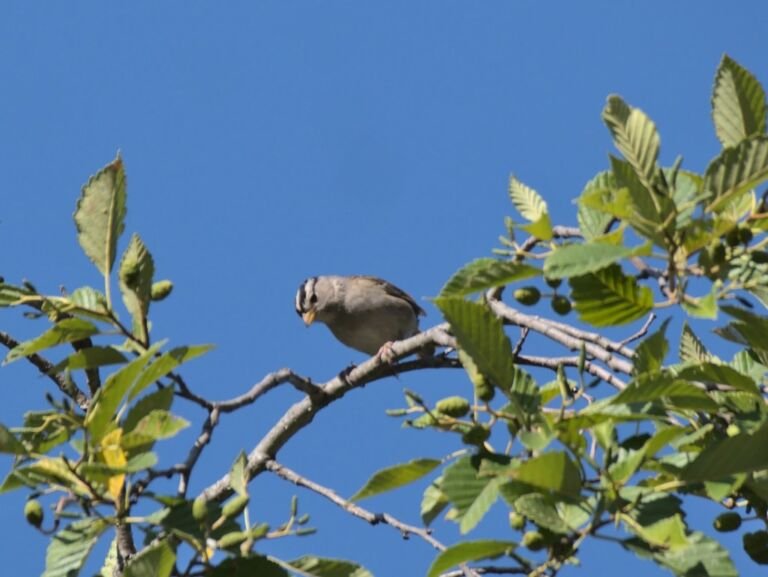 White-crowned Sparrow
Zonotrichia leucophrys
Apr – Jul, Sep
A gray-breasted sparrow with a bold black and white striped crown, found in brushy openings from the lowlands to timberline.
 Song Sparrow
Melospiza melodia
Year-round
A dark, heavily streaked sparrow of brushy streamsides and thickets that sings a bright, varied song for much of the year.
 Spotted Towhee
Pipilo maculatus
Feb – Dec
A big, boldly patterned sparrow with a black hood, red eyes and rusty sides that scratches noisily through leaf litter under shrubs.
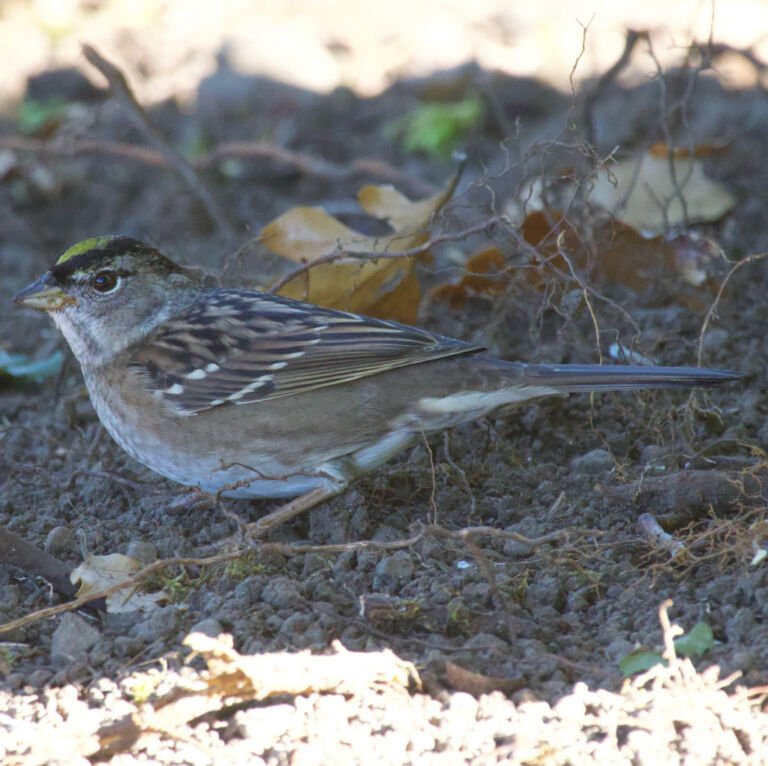 Golden-crowned Sparrow
Zonotrichia atricapilla
Sep – Apr
A big brown sparrow with a gold crown patch and a wistful three-note song, abundant in western Oregon during migration and winter.
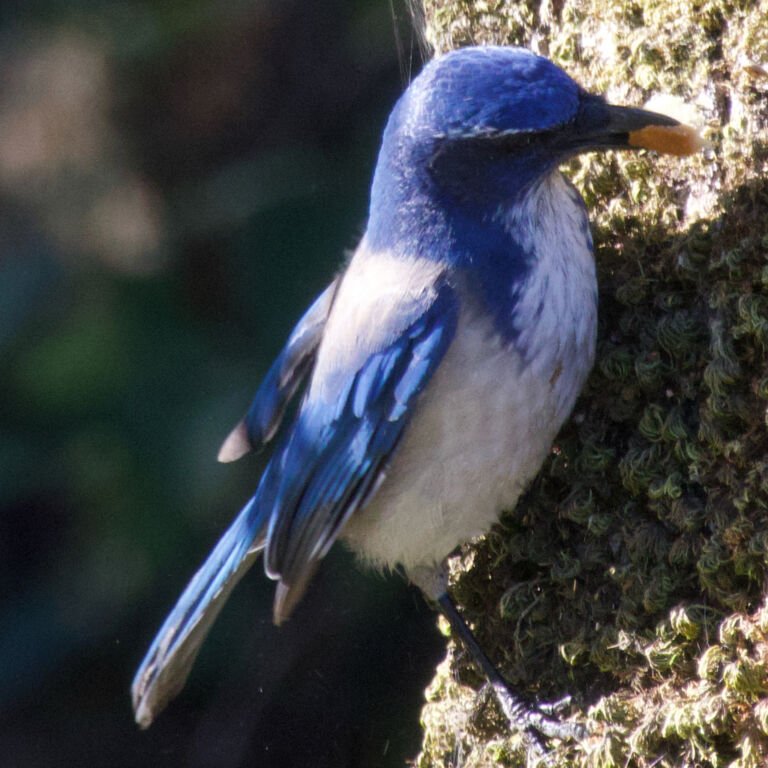 California Scrub-Jay
Aphelocoma californica
Jan – Nov
A crestless blue and gray jay of oak woods, brushy clearings and towns, most often seen at the low edges of the…
The Forest Service says the Trillium Lake Loop crosses wetlands with good bird watching, on a mostly level path of boardwalk and fine gravel. It lists bird watching among things to do at Lost Lake, where the Lakeshore Trail circles the water. Its West Shore day-use page sends wildlife watchers to the Timothy Lake Trail. Laurance Lake High Ridge Trail looks down on the lake known for eagles, and Eightmile Loop climbs to the lookout tower near Fivemile Butte.
 Trillium Lake Loop Trail #761
1.8 mi loop
11 ft
Easy
An easy, barrier-free 2-mile loop around Trillium Lake on boardwalk and fine rock, with wetlands and views of Mt. Hood.
 Lakeshore Trail #656
3.1 mi loop
110 ft
Easy
An easy 3.1-mile loop around Lost Lake on boardwalks and through old-growth forest, with Mount Hood views and a barrier-free section.
 Timothy Lake Trail #528
14.8 mi round trip
1,118 ft
Hard
A lakeshore trail at Timothy Lake with views of Mount Hood and Mount Jefferson that joins the Pacific Crest Trail for a…
 Laurance Lake High Ridge Trail
7 mi round trip
2,336 ft
Hard
A ridge trail from Clear Branch Dam near Parkdale with views of Laurance Lake and Mt. Hood, and a nearby vista point…
 Eightmile Loop Trail #496
6.2 mi loop
1,314 ft
Hard
A mountain bike loop from Eightmile Campground with a spur to Fivemile Butte Lookout and its views of Mt. Hood, Mt. Adams…
Each fall a HawkWatch International crew counts migrating raptors from the top of Bonney Butte, east of the mountain, as part of long-term research on birds of prey. The Forest Service invites the public to stop by. In 2025 the count ran from Aug 28 to Nov 1, daily from 9 a.m. to 5 p.m., so check its events page for next season's dates.
From OR 35, take FR 48, FR 4890 and then FR 4891, a rough four-wheel-drive road at the end. Park in the unmarked lot just past Bonney Meadows Campground and walk 0.5 mile up the old lookout road, around the gate.
Water, sun protection, binoculars and the rest of the ten essentials.
Bonney Butte is on the east side, where fire closures changed on Nov 6, 2026. See alerts and road conditions.
A few public tools help you know what's around before you go, and our nature pages cover each bird above in more depth.
eBird is a free checklist site where birders log sightings and look up recent reports.
The sighting counts on our nature pages come from it, and you can add your own photos.
The state's wildlife viewing map marks 235 places to see wildlife across Oregon.
See wildlife watching on Mt. Hood for pikas, elk and newts.