
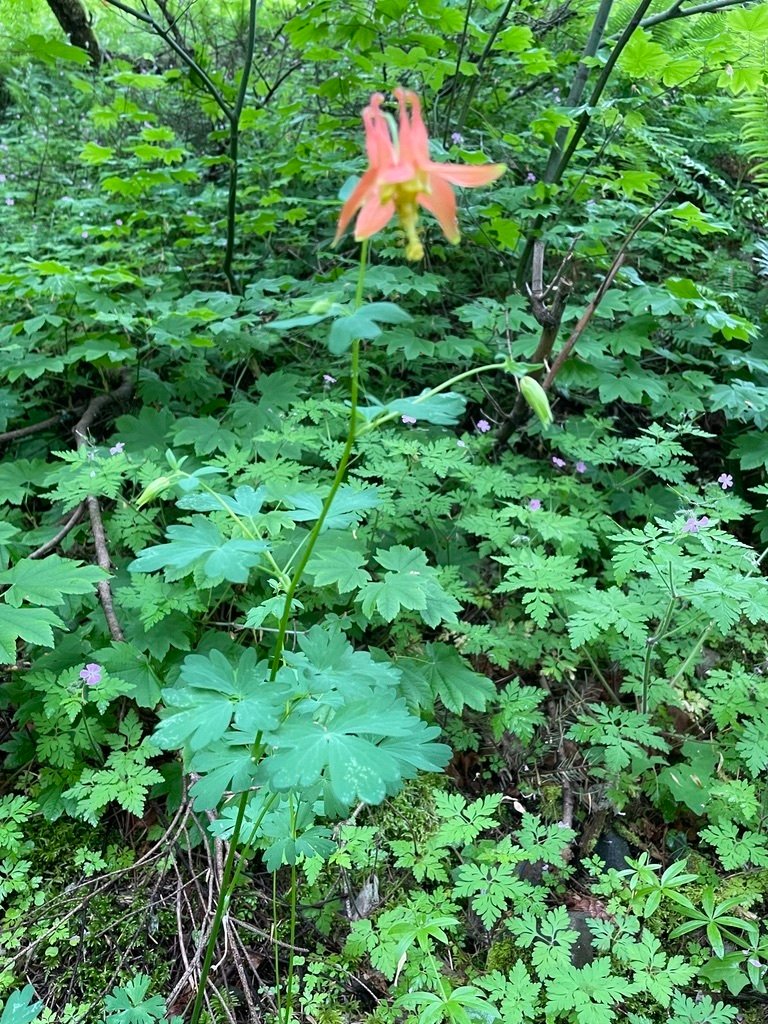
Western columbine is one of the easiest wildflowers on Mt. Hood to recognize. Each flower hangs face down from a slender stalk. Five red, petal-like sepals flare outward, five straight red spurs point up behind them, and a ring of short yellow petal blades surrounds a brush of stamens that hangs below.
Hummingbirds, bumblebees and moths all visit the flowers and carry pollen from plant to plant. The genus name comes from the Latin word for eagle, because the spurs suggest an eagle’s claw. The name columbine comes from the Latin for dove: turn a flower over and it can look like five small doves gathered in a ring.
The plant is a perennial with a woody base. Its leaves, mostly gathered near the ground on long stalks, are divided into threes and then lobed again, which gives the clump a lacy look. Flowering stems range from a few inches to about three feet tall. After blooming, each flower becomes a cluster of five slim pods covered in glandular hairs.
Look for western columbine from late spring through summer in moist forest openings, open woods, streamsides and subalpine meadows.
How to identify it
Nodding flowers with five red, petal-like sepals and five straight, stout red spurs around short yellow petal blades and a tuft of protruding stamens. Leaves are mostly basal and long-stalked, divided into threes, with lobed leaflets that are paler and hairy underneath. Fruit is a cluster of five hairy pods.
Habitat
Moist forest openings, open woods, streambanks and subalpine and alpine meadows. It ranges from lowland woods up to moderate mountain elevations, from Alaska south to California and inland to Alberta and Wyoming.
Photos
Sightings in the forest
913 research-grade sightings in Mt. Hood National Forest on iNaturalist, most recently on August 26, 2026. See them on iNaturalist →