
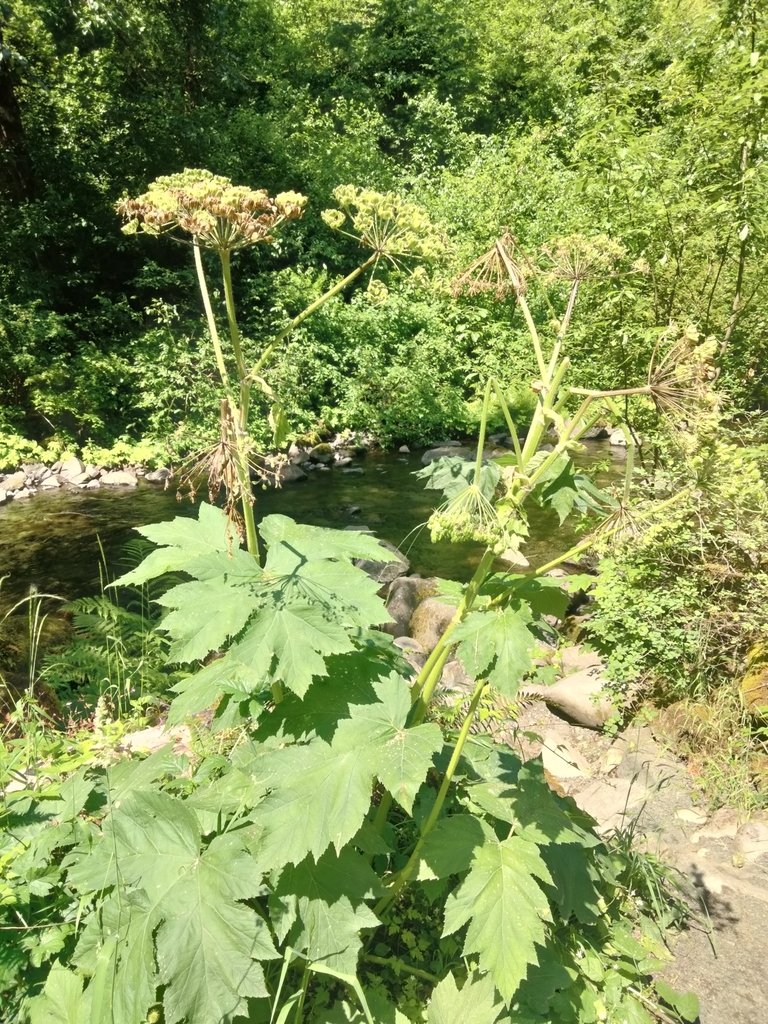
Common cowparsnip is a giant among wildflowers. In its second year it shoots up a thick, hollow, ridged stalk anywhere from 3 to 10 feet tall, crowned with flat-topped clusters of small white flowers. The main cluster can span 8 to 12 inches. The leaves are just as bold: each is split into three broad, lobed and toothed leaflets, and the lower ones can reach 20 inches long and just as wide. Stems and leaves are often woolly with soft white hairs, and crushed leaves have a strong smell.
Its open flowers offer easy nectar and pollen, so they hum with bees, wasps, flies, beetles and butterflies, and swallowtail caterpillars feed on the plant. Deer, elk and bears eat cowparsnip regularly, and it is an important spring food for bears in some regions.
On Mt. Hood, look for it in moist, partly shaded places: streambanks, wet meadows, forest openings and avalanche chutes. It flowers from late spring into midsummer. Admire it without touching. The sap can cause a painful, blistering rash when skin that touched it is then exposed to sunlight, so keep children from playing with the hollow stems.
How to identify it
A very large plant, 1 to 3 m tall, with a hollow, ridged, often hairy stem. Leaves are divided into three large, lobed and toothed leaflets, the lower leaves up to 50 cm across. White flowers form flat, umbrella-shaped clusters up to about 30 cm wide, and the petals on the outer flowers are a little larger and uneven.
Look-alikes
Giant hogweed (Heracleum mantegazzianum), an invasive relative on Oregon's List A noxious weed list, grows much larger, up to 15 feet, with leaves 3 to 4 feet wide and purple or red spots on the stem, and its sap causes worse burns.
Habitat
Moist, partly shaded ground: streambanks, floodplains, wet meadows, thickets, forest edges and openings, and avalanche chutes, from sea level to about 9,000 feet. On Mt. Hood, look for it along creeks and in damp clearings.
Photos
Sightings in the forest
464 research-grade sightings in Mt. Hood National Forest on iNaturalist, most recently on October 22, 2026. See them on iNaturalist →