
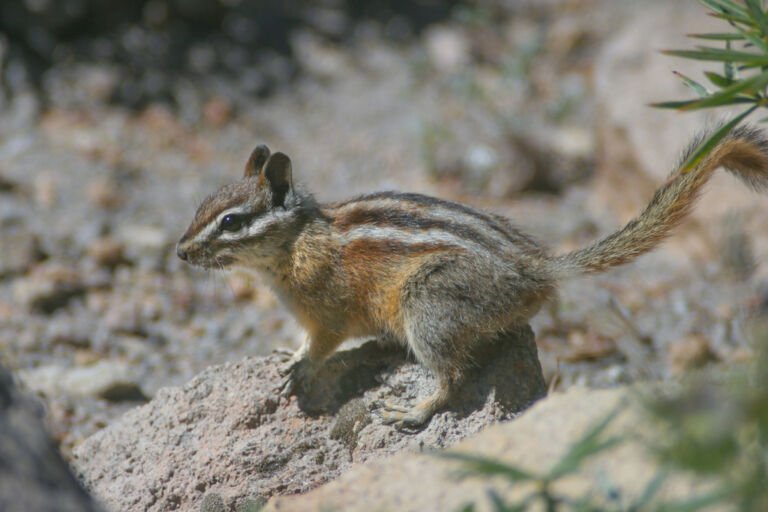
The yellow-pine chipmunk ranks among the smallest chipmunks in Oregon, a quick, bright little animal of open, sunny forests. In Oregon it is closely linked with ponderosa pine and lives from the eastern slopes of the Western Cascades eastward through most of the state. Around Mt. Hood, look for it on the drier east side of the mountain, in brushy pine and mixed conifer forest with plenty of logs, stumps and rocks.
It is active in daylight, starting just before sunrise and staying out until a little after sunset, though it often retreats to its burrow through the hottest part of the day. It eats a wide variety of foods, from conifer seeds, fruit and fungi to insects and the occasional bird egg, and it carries food home in its cheek pouches. In fall it stores seeds in caches, and through the winter it rests in long bouts of torpor, waking about once a week to eat from its stores. By carrying off and caching conifer seeds, it helps spread them through the forest.
Watch for its jerky, start-and-stop movements and the way it holds its tail straight out or upright as it runs. Enjoy it from a distance and keep your snacks to yourself.
How to identify it
A small chipmunk about 7 to 9.5 inches long including the tail, often bright reddish or tawny. Five black stripes run down the back, separated by pale stripes, and the face has a dark stripe through the eye bordered by more pale and dark stripes, the outer pale one nearly white.
Look-alikes
Townsend's chipmunk, of the wetter west slope of the Cascades, is larger and darker with duller colors. The golden-mantled ground squirrel is bigger and has no stripes on its face.
Habitat
Open, brushy conifer forests, especially ponderosa pine, along with rocky outcrops and meadows east of the Cascade crest. It needs logs, stumps, snags or rock crevices for cover and nesting.
Photos
Sightings in the forest
29 research-grade sightings in Mt. Hood National Forest on iNaturalist, most recently on September 27, 2026. See them on iNaturalist →