
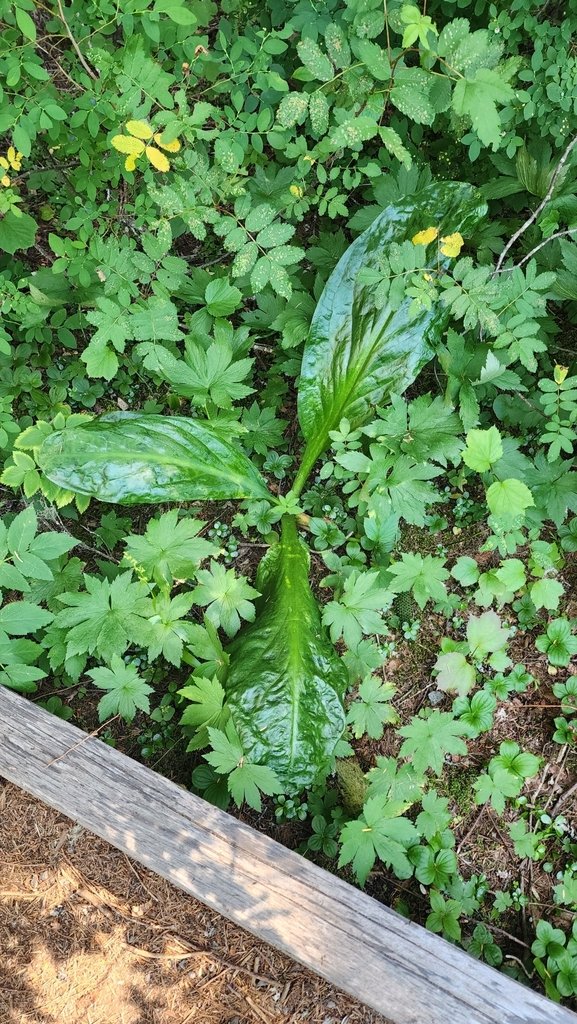
Western skunk cabbage is a native member of the arum family and one of the earliest plants to flower each year. In early spring, often before its leaves are fully up, it pushes a bright yellow hood called a spathe around a thick spike packed with tiny greenish flowers. In a dark, soggy forest bottom the yellow hoods glow like lamps, which is why some people call it swamp lantern.
The smell that gives it its name has a purpose. The odor draws scavenging flies and beetles, which carry pollen from plant to plant. After flowering the hood withers, and the plant puts its energy into leaves that can grow more than 4 feet long, bigger than those of any other native plant in the region. It grows from a stout underground stem that can be more than a foot long.
Elk and bears feed on its stems and roots. Northwest Native peoples used the large leaves when preparing and storing food.
Look for it in marshes, swamps, wet seeps and slow, muddy creek channels from the lowlands to middle elevations. The leaves turn yellow and die back by late autumn.
How to identify it
In early spring, a bright yellow, hood-like spathe several inches long wraps around a thick green spike of tiny flowers, with a musky, skunky odor. Later come huge, fleshy, oval to lance-shaped leaves on short, stout stalks, growing in a clump straight out of the mud.
Habitat
Marshes, swamps, forested wetlands, bog edges and slow creek channels that stay wet all year, from sea level to middle mountain elevations.
Photos
Sightings in the forest
570 research-grade sightings in Mt. Hood National Forest on iNaturalist, most recently on October 7, 2026. See them on iNaturalist →