
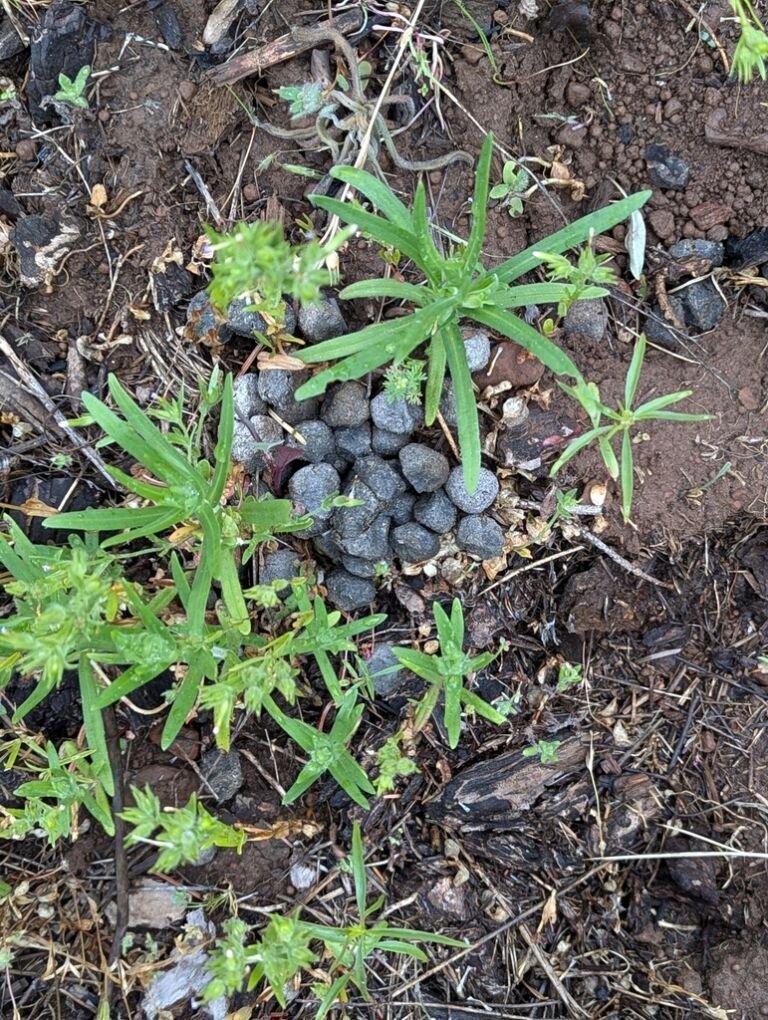
Elk, also known as wapiti, are the biggest members of the deer family in Oregon. They are heavy-bodied animals with a narrow face, a dark brown mane on the neck, a grayish to reddish brown body and a pale cream rump patch around a small tail. The legs and belly are darker than the body. Bulls grow a new set of antlers each year, starting in late spring and keeping them until the next spring.
Two kinds of elk meet in the Cascades. Roosevelt elk live west of the range and Rocky Mountain elk to the east. The Rocky Mountain elk is a bit smaller and paler, with longer, more slender and more spreading antlers. Cows, their calves and young females travel together in herds, usually led by an older cow with a calf, while big bulls spend much of the year on their own.
By July the bulls have polished their antlers and begin searching for cows. During the rut, from late summer into early winter, they bugle, rub trees and brush with their antlers, and spar with rival bulls. A bugling bull is one of the great sounds of a fall evening in the forest. Wherever you meet elk, give them plenty of room.
How to identify it
A very large deer with a dark brown, shaggy neck, a grayish to reddish brown body, dark legs and a pale cream rump patch. Bulls carry wide, branching antlers from late spring into the following spring and can weigh up to about 700 pounds.
Look-alikes
Mule deer are the closest relatives in the area, but a bull elk can outweigh one by as much as 500 pounds, and elk have a dark, shaggy neck and a large pale rump patch.
Habitat
Forests, clearings and meadows across much of Oregon. Roosevelt elk use the west side of the Cascades and Rocky Mountain elk the east side, so Mt. Hood National Forest, which spans the crest, falls between the two.
Photos
Sightings in the forest
22 research-grade sightings in Mt. Hood National Forest on iNaturalist, most recently on September 17, 2026. See them on iNaturalist →