
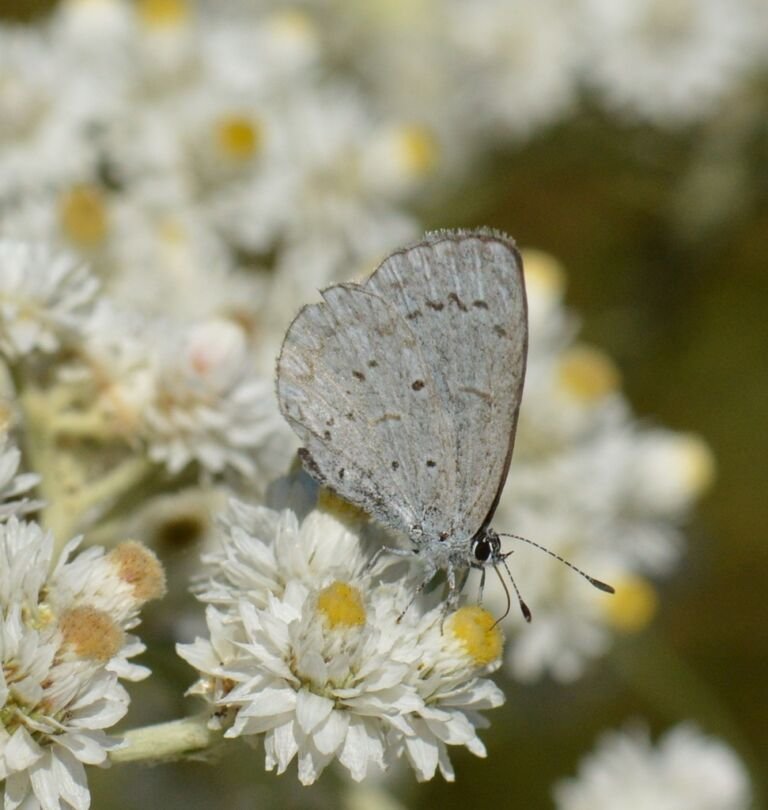
The Echo Azure is a common small blue butterfly in western Oregon and an early flier, with adults out from late February in mild places. Males are a soft lilac blue on top with no dark markings; females are a duskier blue with dark borders along the outer edge of the forewings. When one lands and folds its wings, you see the underside instead: chalky pale gray with small black spots and dashes and a faint row of chevrons near the edge.
Azures lay their eggs on the flower buds of shrubs, and the caterpillars feed on the buds and opening flowers. In Oregon the list of host shrubs is long, including red osier dogwood, elderberry, madrone, snowbrush and ocean spray. Ants tend the caterpillars, which sometimes even pupate inside ant nests.
Adults fly in a series of generations from late winter into early fall, with a shorter season in the mountains than in the lowlands. They sip nectar from the flowers of their host shrubs and other plants. Look for them along creeks, shrubby trail edges and forest openings on Mt. Hood’s lower slopes, especially on sunny days in spring.
How to identify it
A small blue butterfly, about 1 to 1.25 inches across. Males lilac blue above with no black markings; females duller blue with dark outer borders on the forewings. Underside pale chalky gray-white with small black spots, gray bars and a faint row of chevrons near the edge. No tails and no orange spots.
Look-alikes
Several other small blues fly in the same places. The Echo Azure's lack of tails and orange spots, combined with its plain, chalky underside with tiny black marks, usually tells it apart.
Habitat
Shrubby places with woody host plants: streamsides, forest edges, clearings and roadsides. Found across most of Oregon except the dry basin and range country east of the Cascades.
Photos
Sightings in the forest
148 research-grade sightings in Mt. Hood National Forest on iNaturalist, most recently on July 15, 2026. See them on iNaturalist →