
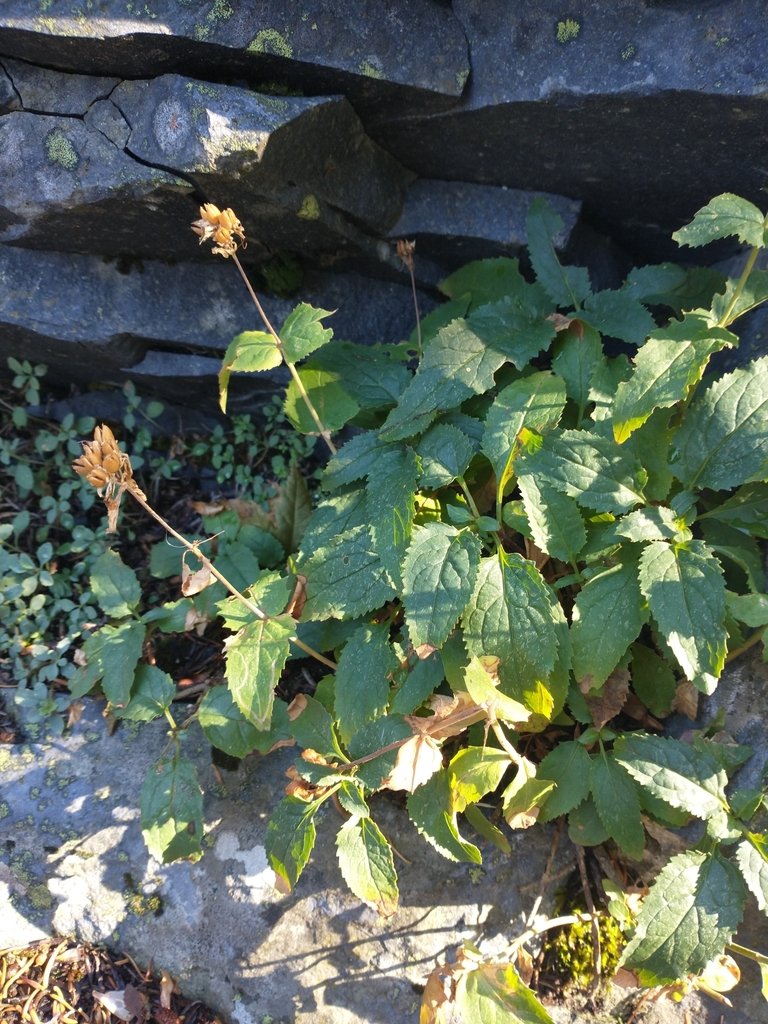
Cascade beardtongue brings deep blue and purple to wet places in summer. It grows in leafy clumps from a woody base, with paired, sharply toothed leaves along stems up to about two feet tall. At the top of each stem, one to five whorls of tubular, two-lipped flowers cluster tightly around the stalk, the lower whorls a little looser than the upper ones.
Look inside a flower and you can see how the beardtongues got their name. Beside the four stamens that carry pollen sits a fifth, sterile stamen with a tuft of yellow hairs on its upper half, like a small beard. The flowers draw a busy crowd: bumblebees and other bees, flies, wasps and hummingbirds all visit them.
This is a plant of the Cascades and nearby ranges, found from southern British Columbia south into Oregon. Look for it on streambanks, in damp gullies and meadows, on rocky slopes and in forest openings, from low elevations up into the lower subalpine. It flowers through the summer, adding color after many of the spring wildflowers in the forest have faded.
How to identify it
Stems about 8 to 28 inches tall rise in clumps from a woody base, with opposite, lance-shaped to oval leaves 1 to 3.5 inches long and sharply toothed. Deep blue to dark purple tubular flowers, about three quarters of an inch to an inch long, crowd into one to several whorled clusters at the top of the stem.
Look-alikes
Small-flowered penstemon has similar blue-purple whorls, but its flowers are much smaller, under half an inch long, and its leaves have smooth edges rather than teeth.
Habitat
Streambanks, moist gullies, wet meadows, forest openings and rocky slopes, from low elevations to the lower subalpine. Its range runs from southern British Columbia to Oregon.
Photos
Sightings in the forest
444 research-grade sightings in Mt. Hood National Forest on iNaturalist, most recently on September 25, 2026. See them on iNaturalist →