
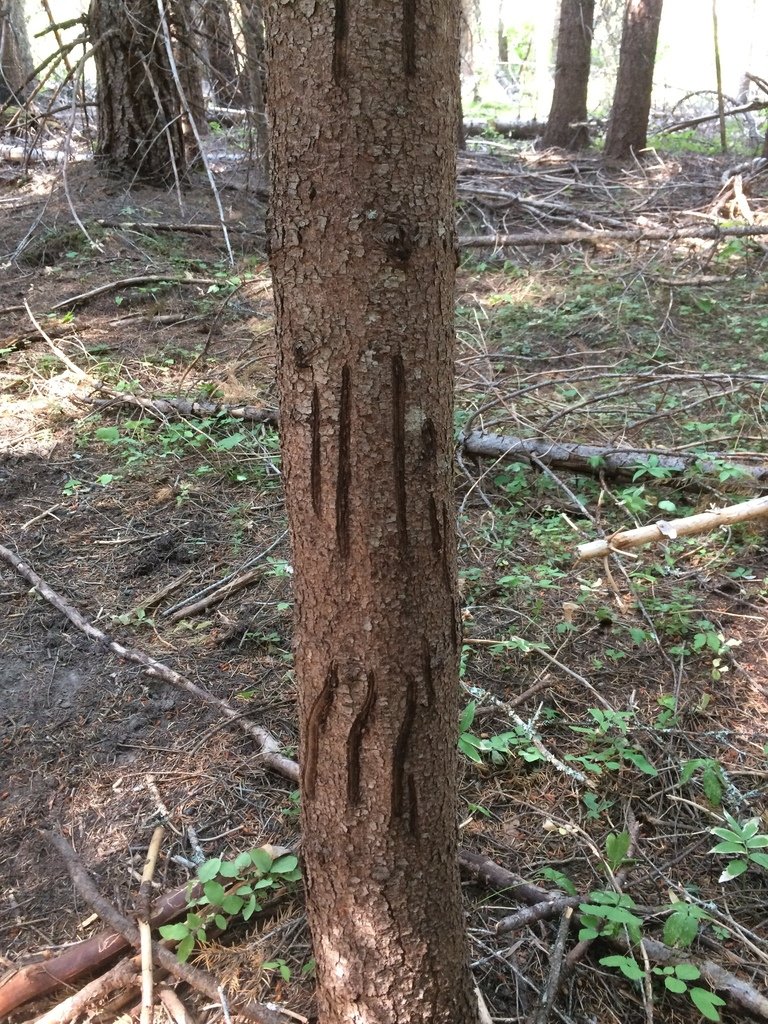
Oregon has roughly 25,000 to 30,000 black bears, most of them in the Cascades and the Blue and Wallowa mountains, and Mt. Hood’s forests are part of that bear country. Despite the name, western black bears are often brown, cinnamon or even blond, usually with a paler muzzle. A heavy body, short legs, big feet, small eyes and ears, a very short tail and no shoulder hump help set them apart.
Black bears eat mostly plants: fresh grasses and greens in spring, berries and other soft fruit in summer, and nuts and seeds in fall, plus insects such as ant and bee colonies and the occasional carcass. They are not active predators. In autumn they fatten up, then spend the winter in a den under a stump or log, in a hollow tree or in a hole in a hillside. Cubs, usually two or three, are born in the den in midwinter and stay with their mother until they are about a year and a half old.
Bears are normally wary of people, but a bear that gets human food can lose that fear and become dangerous. Most bears that learn to find food around people end up being killed, which is why feeding bears is illegal in Oregon and why careful food storage matters at every campsite.
Seeing one from a safe distance is a highlight of any trip. Give it plenty of room and let it move on.
How to identify it
A large, heavily built bear with short legs, big feet, short curved claws, small eyes and ears, and a very short tail. Coat black, brown, cinnamon or blond, often with a paler muzzle and sometimes a white chest spot. No shoulder hump, and a fairly straight face profile.
Look-alikes
Grizzly bears no longer live in Oregon, so a brown or cinnamon bear on Mt. Hood is a black bear. Grizzlies have a large shoulder hump, shorter, furrier ears and a dished face.
Habitat
Forests of the Cascades and Coast Range, especially where berries, meadows and streams lie close to cover. In Oregon they range from the Cascades west to the coast and in the northeastern mountains, but not in the dry central and southeastern parts of the state.
Photos
Sightings in the forest
61 research-grade sightings in Mt. Hood National Forest on iNaturalist, most recently on October 23, 2026. See them on iNaturalist →